Drive ten minutes south of Ghent's medieval center, and you’ll reach one of Europe's densest deep-tech clusters. Tech Lane Ghent Science Park spans 60 hectares across two sites, Campus Ardoyen and Campus Eiland Zwijnaarde. More than 4,400 high-tech professionals work here, in 11 university labs, 12 public research centers, 8 industrial pilot and test facilities, and over 90 knowledge-intensive start-ups.
The park is a place where science turns into business. Ghent University runs its engineering research here, next to the strategic research centers imec and VIB. Around them sit global companies and the spin-offs that grow out of the labs. Our innovation clusters run from digital, tech, health tech & (bio)pharma, agro/food tech, and clean tech/materials.
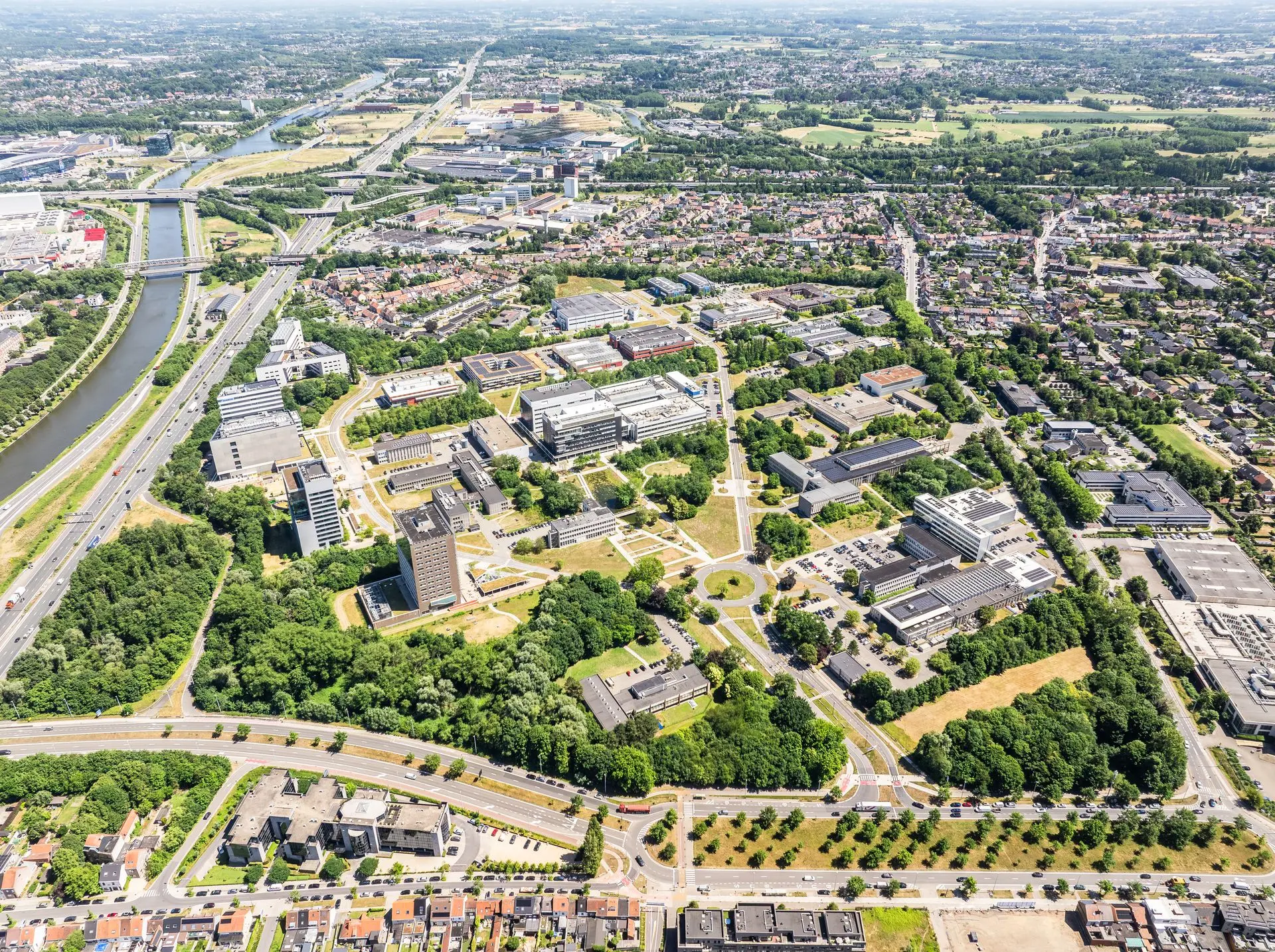
Tech Lane from the clouds. Copyright © UGent / Jonas Vandecasteele
In AmCham Belgium's #YearOfInnovation, Tech Lane wants to tell a story that is often overlooked: how closely this Flemish ecosystem is tied to the United States.
American Companies that Choose Ghent
Several US multinationals have made Tech Lane their European base for research and production.
Johnson & Johnson, through Janssen, built its first European CAR-T cell therapy production facility at Tech Lane Ghent Science Park, in cooperation with Legend Biotech. CAR-T is one of the most personalized treatments in medicine: a patient's own T-cells are extracted, reprogrammed to attack cancer cells, and returned to the patient. J&J chose Ghent explicitly for its local life sciences ecosystem. That choice says a lot about what the park offers: talent, university research within walking distance, and a network of specialized suppliers.
Eastman, the specialty materials company headquartered in Kingsport, Tennessee, runs its EMEA Technology Center on Tech Lane Ghent Science Park. From Ghent, Eastman's researchers support customers across Europe, the Middle East, and Africa, and work alongside the university's chemistry and materials groups on the same campus.
These companies do not only rent space. They hire Ghent University graduates, join research projects, and help shape the park’s deep tech ecosystem.
Internet and Data Science Lab: A Digital Powerhouse with a Transatlantic Network
IDLab at Tech Lane Ghent Science Park has particularly strong connections with the US. IDLab is an imec research group at Ghent University.
Over 350 internet experts and data scientists at IDLab, spread over about 20 teams, focus on connectivity and artificial intelligence. With over 500 industrial collaborations to-date, IDLab demonstrates its strength of applying scientific research in practical implementations at R&D centers from multinationals to Flemish SMEs and start-ups.
Several of IDLab's most visible achievements were built together with American partners.
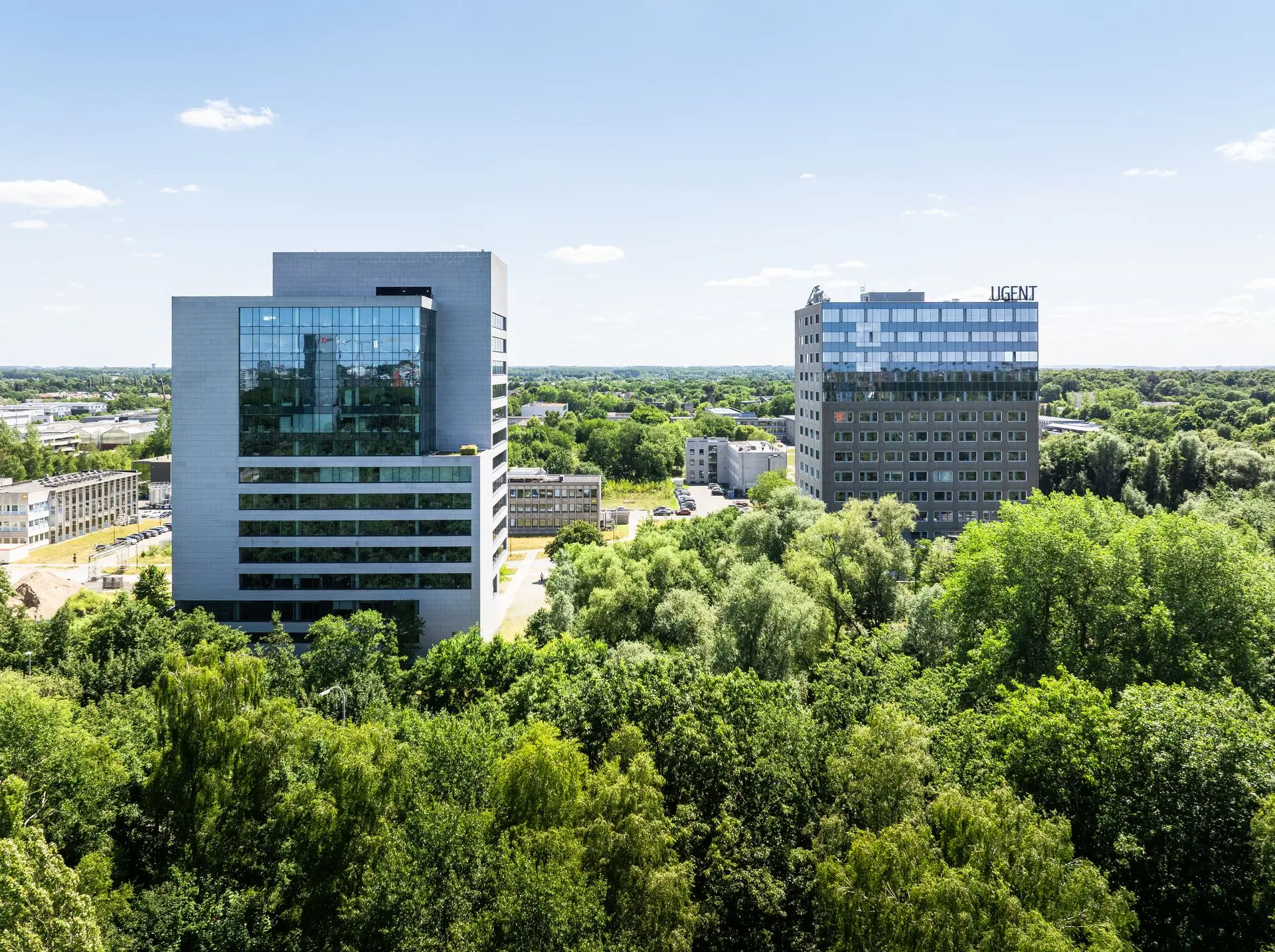
Copyright © UGent / Jonas Vandecasteele
Competing at DARPA with Rutgers. Radio spectrum is scarce, and more devices compete for it every year. The US Defense Advanced Research Projects Agency (DARPA) launched the Spectrum Collaboration Challenge to find out whether AI-managed radios could share spectrum better than static rules. IDLab joined forces with Rutgers University in New Jersey as team SCATTER. In December 2018, SCATTER was one of six teams to win $750,000 in the final qualifier. In 2019, it reached the championship as one of ten finalists, next to teams from Drexel, Vanderbilt, Northeastern, and the University of Florida. For a Belgian lab, competing at the top of a US defence research challenge was a strong signal of world-class expertise.
In the CHAI project (2022-2024), industrial partners allnex Belgium, Dotdash, Procter & Gamble Services Company, and IDab developed explainable hybrid AI for optimizing and scaling chemical production. By combining process data with the expertise of experienced engineers, the system will help less experienced operators build knowledge faster, provide actionable insights, and free experts to focus on critical tasks. The proposed AI overcomes key adoption barriers: purely data-driven and opaque models do not capture expert know-how or provide the explanations engineers need to act safely. Productivity and safety must be optimized together, and models must continuously learn from evolving, sometimes conflicting, feedback.
The IDlab SUMO Lab focuses on the creation of surrogate models: data-efficient machine learning techniques, with applications in science, engineering, and healthcare. The SUMO software and algorithms are successfully used to study, design, and optimize various complex engineering systems by academia, government and corporations such as Boeing, Toyota, Atlas Copco, Siemens, and others worldwide.
Shaping Global Wireless Standards
IDLab researchers are active in international bodies such as IEEE, the US-based engineering association. In 2025, Prof. Ingrid Moerman was named IEEE Fellow for her work on wireless networks. IDLab's jFed tool also helps researchers run experiments across federated testbeds in Europe, using the same open federation interfaces that were first developed for US research networks.
Innovation that Travels Both Ways
The exchange runs in both directions. American companies come to Tech Lane for research talent and a strong biotech and digital ecosystem. Belgian researchers bring their results to US universities, agencies, and markets.
IDLab's recent work shows what comes next. The lab tests private 5G networks for emergency services, builds O-RAN-compliant Wi-Fi access points, and works with imec and Belnet on Belgium's first quantum key distribution links. Its spin-offs, such as nobl.ai, which builds trustworthy AI for the job market, and eSave, are growing in the park. Each of these fields, from 6G and open networks, to trustworthy AI and quantum communication, has strong US players looking for European partners.
The Brain – AI Tech Hub
By mid-2027, The Brain – AI Tech Hub will open its doors at Tech Lane Ghent Science Park. This ambitious research and innovation center for artificial intelligence will become the leading reference point for AI research, AI innovation, and AI entrepreneurship.
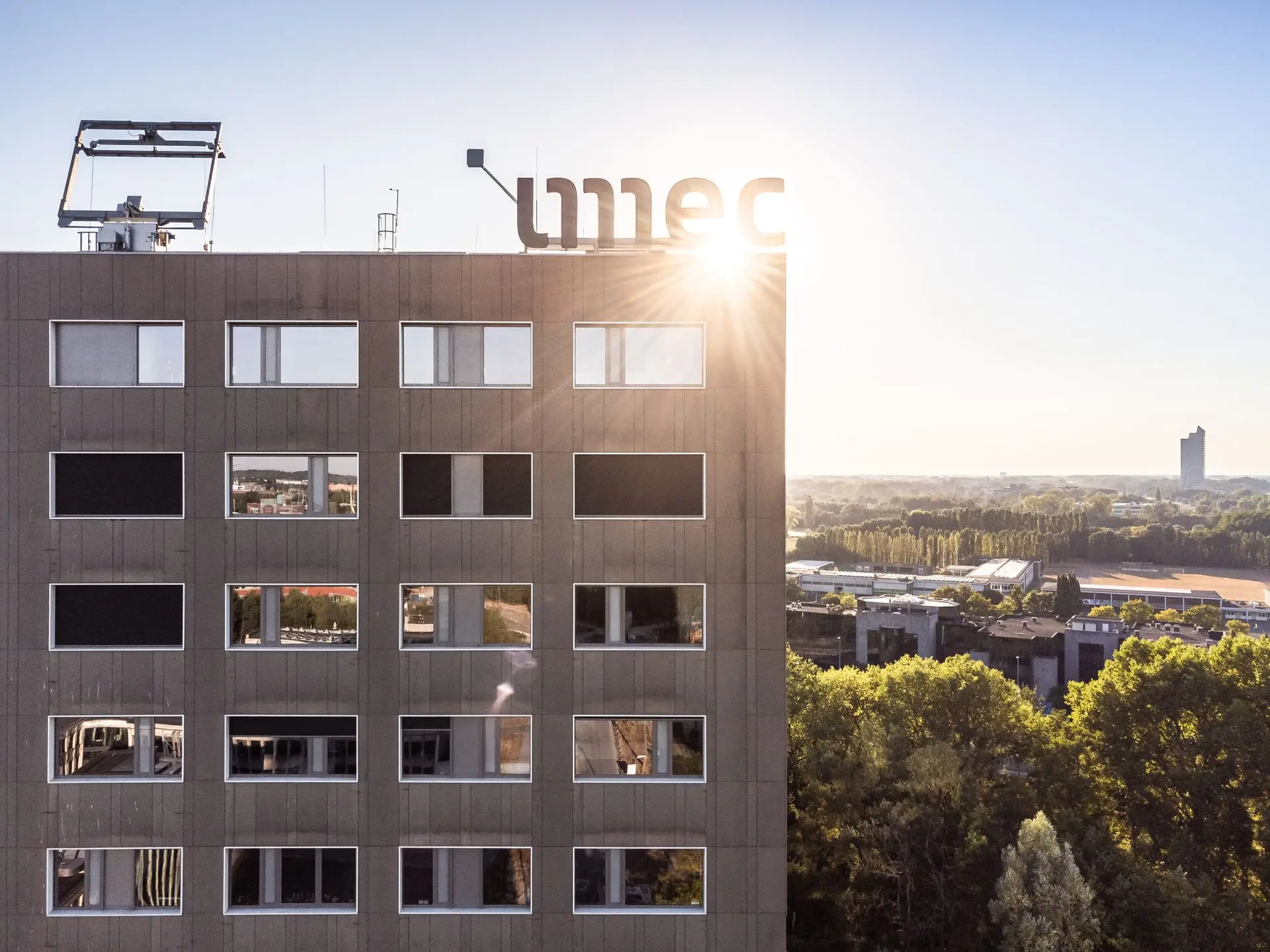
Copyright © UGent / Jonas Vandecasteele
The Brain is a strategic initiative of imec-IDLab-UGent that aims to accelerate the continued growth of the AI ecosystem. The iconic 15-story building will provide more than 20,000 m² of space for research, innovation, and collaboration. It will accommodate up to 1,000 AI experts, including IDLab researchers, innovative technology companies, start-ups, scale-ups, and industrial partners.
And The Brain is much more than a building. It brings together three complementary pillars:
- an iconic landmark building;
- a leading AI research and innovation hub;
- an active AI community that fosters collaboration and knowledge sharing.
That is where Tech Lane Ghent Science Park wants to play its role. We offer American companies a single entry point to Ghent University's labs, to imec and VIB, and to a pipeline of start-ups. We help new residents find lab space, recruit talent, and connect with research groups like IDLab.
For US companies looking for a European base for R&D, our message is simple: come and see what is being built in Ghent. The next breakthrough may well be a transatlantic one.
All photographs featured are protected by copyright © UGent / Jonas Vandecasteele.
How Tech Lane Ghent Science Park Turns Transatlantic Ties into Innovation